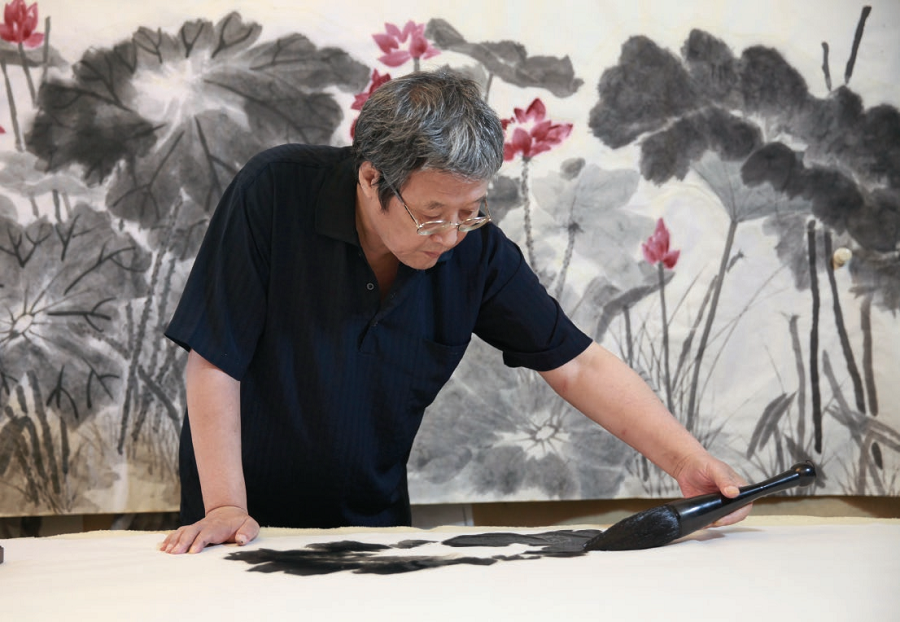
Wen Xiang
Introduction
Wen Xiang is an esteemed painter renowned for his mastery in ink landscape paintings, a genre deeply rooted in traditional Chinese art. His works are celebrated for their ability to evoke the ancient Chinese concept of "woyou" or "lie down and travel," which describes the immersive experience of appreciating fine mountain-and-water paintings. This concept allows viewers to feel as if they are surrounded by serene landscapes, even without physically traveling to such locations. Wen's art, therefore, offers a respite and a transportive experience, especially poignant in times when travel is restricted.
Early Life
Born into a family of intellectuals and artists, Wen Xiang was exposed to the world of fine arts from an early age. This nurturing environment laid the foundation for his future endeavors in painting. Wen's early life was marked by a deep curiosity and passion for the arts, which was further cultivated by his family's influence. His foray into the artistic realm began in childhood, setting the stage for a lifelong journey of exploration and creation in the world of fine arts.
Artistic Career
Wen Xiang's artistic career is characterized by a profound engagement with both historical and contemporary influences, which have shaped his distinctive approach to painting. His initial foray into professional art involved working at the Palace Museum in Beijing, where he had the opportunity to study ancient artworks and handicrafts. This experience was pivotal, as it allowed Wen to immerse himself in the techniques and philosophies of classical Chinese art, which he would later integrate into his own work.
In 1991, Wen was offered a chance to travel to Japan, where he engaged in cultural exchanges that enriched his artistic perspective. During his time in Japan, he taught classic Chinese paintings and furniture design, which facilitated friendships with Japanese artists. These interactions introduced Wen to Japanese aesthetics, which he incorporated into his own work, resulting in a unique fusion of styles that is evident in the pieces he produced during and after this period.
Influences and Style
Wen Xiang's artistry is heavily influenced by both historical Chinese traditions and the contemporary cultural exchanges he participated in, particularly during his time in Japan. His style is a harmonious blend of classical Chinese painting techniques and the minimalist elegance associated with Japanese aesthetics. This synthesis is evident in Wen's use of ink landscapes, where he captures the essence of nature with a refined simplicity that resonates with both Chinese and Japanese artistic sensibilities.
A significant aspect of Wen's style is his attempt to forge spiritual connections with scholars and artists from the Song Dynasty (960-1279), a period renowned for its artistic achievements. This historical connection informs his work, as he strives to convey the same sense of tranquility and oneness with nature that was central to Song Dynasty art. Wen's paintings are not just visual representations but are imbued with a philosophical depth that invites viewers to reflect on the relationship between humans and the natural world.
Major Works
Wen Xiang's major works include a series of ink landscape paintings that have been exhibited in various prestigious galleries and exhibitions. These works are celebrated for their ability to transport viewers into serene natural settings, embodying the concept of "woyou." Wen's paintings often depict expansive scenes of mountains, rivers, and forests, rendered with a delicate yet confident brushstroke that captures the essence of the landscapes he portrays.
His work has been showcased in exhibitions such as Extensive and Moist, which highlights his mastery in creating immersive environments through ink landscapes. This exhibition, held at the Beijing Fine Art Academy, is a testament to Wen's ability to evoke strong emotional and sensory responses in his audience.
Exhibitions and Recognition
Wen Xiang has been the subject of numerous exhibitions that celebrate his contribution to the world of ink landscape painting. One notable exhibition is Extensive and Moist, held at the Beijing Fine Art Academy. This exhibition featured dozens of Wen's landscape paintings, each offering a glimpse into the tranquil and immersive environments he creates through his art. The exhibition provided a platform for audiences to appreciate Wen's ability to evoke the feeling of being embraced by nature, a particularly poignant experience during periods of travel restrictions.
Throughout his career, Wen has received recognition for his innovative approach to traditional Chinese painting. His ability to blend historical influences with contemporary aesthetics has earned him acclaim both domestically and internationally. Wen's work continues to be celebrated for its technical precision and the profound emotional resonance it evokes in viewers.
Legacy and Impact
Wen Xiang's legacy is firmly rooted in his ability to bridge the gap between traditional Chinese art and contemporary cultural influences. His work has revitalized the genre of ink landscape painting, introducing it to new audiences and ensuring its relevance in the modern art world. Wen's paintings serve as a testament to the enduring appeal of Chinese artistic traditions and their capacity to inspire and resonate with people across different cultural backgrounds.
Wen's impact extends beyond his artistic creations; his commitment to cultural exchange and his efforts to forge connections with past artistic traditions have enriched the broader art community. Through his work, Wen has contributed to a deeper understanding of the philosophical and aesthetic principles that underpin classical Chinese art, ensuring their continued relevance and appreciation in contemporary society. His paintings not only offer a visual feast but also invite contemplation on the timeless themes of nature, harmony, and the human experience.








